
MTF Semester 2 - Week 11 - 18/10/07
Today we had our first round of forum presentations for our portfolio package.
Lauren presented first outlining how she produces under The Elektro Kitten logo.
She has a well rounded package that gives a rundown of her qualifications, artists she worked with, skills/services she can offer and a variety of works. The only thing I would say to Lauren is that when presenting it would be good to have an outline on paper and use that as a guide. I think people start to go to sleep when someone reads word for word a pre-prepared presentation from paper. Adding to this is when she reads she speeds up and the audience goes Zzzzzz. Otherwise fantastic, her portfolio shows she is very talented indeed.
 Brendan had the idea to get feedback from the class on what songs he should include in his portfolio. He asked what the class liked/disliked and what we would have done differently. He also plans to set himself apart by having a DVD with a montage on it and if time permits for assessment but if not after, a website. His is interested in film sound.
Scott provided a good balance of musical examples that showcased his many talents. Examples played were created in different programs and showed skills in engineering, producing and composing.
Ben gave more of an overview of what faces everybody now. He shows that he is definitely thinking how best to showcase his talents.
Josh talked about how he was very interested in the course because he wants to create music for computer games and has even put together one of his own and added effects and music. His mixes of the Zelda theme were very easy to listen to.
Everybody has a slightly different interest in recording for bands, dance, film, games or animation.
Lauren presented first outlining how she produces under The Elektro Kitten logo.
She has a well rounded package that gives a rundown of her qualifications, artists she worked with, skills/services she can offer and a variety of works. The only thing I would say to Lauren is that when presenting it would be good to have an outline on paper and use that as a guide. I think people start to go to sleep when someone reads word for word a pre-prepared presentation from paper. Adding to this is when she reads she speeds up and the audience goes Zzzzzz. Otherwise fantastic, her portfolio shows she is very talented indeed.
 Brendan had the idea to get feedback from the class on what songs he should include in his portfolio. He asked what the class liked/disliked and what we would have done differently. He also plans to set himself apart by having a DVD with a montage on it and if time permits for assessment but if not after, a website. His is interested in film sound.
Scott provided a good balance of musical examples that showcased his many talents. Examples played were created in different programs and showed skills in engineering, producing and composing.
Ben gave more of an overview of what faces everybody now. He shows that he is definitely thinking how best to showcase his talents.
Josh talked about how he was very interested in the course because he wants to create music for computer games and has even put together one of his own and added effects and music. His mixes of the Zelda theme were very easy to listen to.
Everybody has a slightly different interest in recording for bands, dance, film, games or animation.
MTF Semester 2 – Week 10 – 11/10/07
This week we visited a friend of David Grice, Sean Timms, at his studio Timms Tunes. The bread and butter of this business is advertising. Some of their clients as mentioned on the website are BMW, Mitsubishi, Coopers and many more including government contracts. It is apparent that Sean is a talented composer and pianist. He had some good advice on how he deals with clients. Like using broad brush strokes to get an idea of what the client is after and refining it from there. Most clients will not be able to articulate in musical terms what they require so Sean likes to communicate on an emotional level. How does the client want people to feel when listening/viewing?
The building houses 3 studios of varying sizes connected to a central server. Two other engineers work out of studio B and C, with Seans office being Studio A. In Studio A there is plenty of outboard gear that Sean admits he doesn’t really use anymore as the need for total recall is very important to him as he may not come back to a project for months. A client cannot wait while he tries to dial up a setting he had. Seans feels clients have become used to being able to make instant changes and like to leave their stamp on the finished product.
He also mentioned that he would employ someone if they had the right skills but more importantly the right attitude. It is a good opportunity for someone who is willing to do their “Apprenticeship” in the industry.
http://www.timmstunes.com/
The building houses 3 studios of varying sizes connected to a central server. Two other engineers work out of studio B and C, with Seans office being Studio A. In Studio A there is plenty of outboard gear that Sean admits he doesn’t really use anymore as the need for total recall is very important to him as he may not come back to a project for months. A client cannot wait while he tries to dial up a setting he had. Seans feels clients have become used to being able to make instant changes and like to leave their stamp on the finished product.
He also mentioned that he would employ someone if they had the right skills but more importantly the right attitude. It is a good opportunity for someone who is willing to do their “Apprenticeship” in the industry.
http://www.timmstunes.com/
MTF Semester 2 – Week 9 – 04/10/07
We visited one of Australia’s premiere postproduction facilities Oasis Post. From high-end commercials to feature films and DVDs it looks like Oasis Post has it all covered. Oasis is part of the Kojo Group and our tour guide Marty is an owner. To see such a simply laid out set up is inspiring but of course the reality is that it is all held together with probably millions worth of the latest technology. I was really interested to hear how high end movies are rendered down to add sound then final touches added at full HD. Scott Hicks and Greg McLean have finished their films here. There are countless commercials I recognise in their showreel on their website. http://www.oasispost.com.au/index.asp
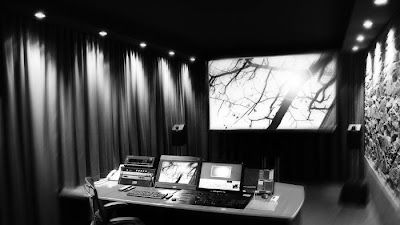
It is obvious that these guys are based in Adelaide. The support they show for local artist is fantastic. They filmed and produced the new Hilltop Hoods DVD with the Adelaide Symphony Orchestra and on their showreel they have The Hot Lies and Ben Folds when he was based here. It is amazing to see that the post-production for a project could all be done in the same building.
This is a very impressive facility and as with most of the places I’ve seen. I WANT ONE.

It is obvious that these guys are based in Adelaide. The support they show for local artist is fantastic. They filmed and produced the new Hilltop Hoods DVD with the Adelaide Symphony Orchestra and on their showreel they have The Hot Lies and Ben Folds when he was based here. It is amazing to see that the post-production for a project could all be done in the same building.
This is a very impressive facility and as with most of the places I’ve seen. I WANT ONE.
Studio Engineering Week 8 out-of-class exercise
There are several automation modes on top of plug-in automation modes available in Pro Tools.
When set to Auto Off all automation data will be ignored. This is handy when wish to have no automation represented when you playback.
When Auto Write is selected, data will be written for the parameter specified such as pan or volume. This is great for real time mixing of a track.
Selecting Auto Read will mean that the automation data is read and not affected in any way. This is always selected to hear automation while playback is occurring.
Selecting Auto Touch will allow you to playback and adjust volume or panning etc and the value will snap back to the original level when the faders have stopped being moved.
Selecting Auto Latch will mean that the value of automation will remain where the fader level has been left it will not snap back to the original level as Auto Touch does.
Auto Trim is a relative mode that allows you to keep the existing automation data but allows you to turn up or down.
Write to will mean that the value at the end of the automation will be written back to the start of the song or as you have setup.
Some preferences are handy for automation such as the degree of thinning after a write pass, latching behaviour for switch controls in “touch”, the option to include control changes in the undo window, automatch time and after write pass switch to touch, latch or no change.
VCA groups are controlled by master fader and are designed to emulate the purpose of Voltage Controlled Amplifiers on analogue consoles.
References:
Pro Tools Reference Manual. Ver. 7.3
Lecturer: Steve Fieldhouse, Dip of Music (Sound Engineering) EMU Unit, Adelaide University.
When set to Auto Off all automation data will be ignored. This is handy when wish to have no automation represented when you playback.
When Auto Write is selected, data will be written for the parameter specified such as pan or volume. This is great for real time mixing of a track.
Selecting Auto Read will mean that the automation data is read and not affected in any way. This is always selected to hear automation while playback is occurring.
Selecting Auto Touch will allow you to playback and adjust volume or panning etc and the value will snap back to the original level when the faders have stopped being moved.
Selecting Auto Latch will mean that the value of automation will remain where the fader level has been left it will not snap back to the original level as Auto Touch does.
Auto Trim is a relative mode that allows you to keep the existing automation data but allows you to turn up or down.
Write to will mean that the value at the end of the automation will be written back to the start of the song or as you have setup.
Some preferences are handy for automation such as the degree of thinning after a write pass, latching behaviour for switch controls in “touch”, the option to include control changes in the undo window, automatch time and after write pass switch to touch, latch or no change.
VCA groups are controlled by master fader and are designed to emulate the purpose of Voltage Controlled Amplifiers on analogue consoles.
References:
Pro Tools Reference Manual. Ver. 7.3
Lecturer: Steve Fieldhouse, Dip of Music (Sound Engineering) EMU Unit, Adelaide University.
MTF Semester 2 – Week 8 – 13/09/07

SA Film Corporation tour.
This week we visited the SA Film Corporation at Hendon and I was pleasantly surprised with facilities available. Very interesting was the Foley “artists’ lair” which closely resembled a very messy shed but in a studio environment with lots of different textures to walk on, plenty of items to make clangs and bangs. There is also a viewing room, which is really a Dolby digital certified mixing theatre with a massive automated Harrison Series 12 mixing station, Pro Tools HD and Fairlight workstations. Of interest is the fact that there is a Syninet link to London which allows a director to OK changes and edits in real time.
 The corporation has an impressive list of achievements but as it appears to be the case with artists in general most of the crew work on these films for love not money and also have “day jobs”.
MTF Semester 2 – Week 5 – 23/08/07
On Thursday we visited Disk-Edits at Bowden.
Neville Clark has setup a fantastic facility with all the toys to bring dribble to the lips of any aspiring Engineer/Producer. His Studio has been fitted out by an acoustic engineer and consists of a Mastering suite, Recording area and a Post-Production room. Although right next the Recording area Neville can work in the Mastering suite while a loud guitar amp is being recorded thanks to the triple glass and brick wall separating the two. Noise in the Mastering area was at an absolute minimum with all computers etc isolated in the machine room and although there were nearly 15 of us in the air tight room I could not hear the air-con. And we were all comfortable. Amazing! Neville says that all of these factors lead to less stress in the room.
Neville explained about how the reflective surfaces in his room worked and how the object was to have none of them affecting the listening position. I have to say that diffusion of the sound waves is the best excuse for having a messy desk I’ve ever heard.
Neville has diversified his business and does lots of voice over work, preservation of sound for museums etc and is almost up and running in 5.1.
References:
A couple of hours with Neville Clark at Disk-Edits.
Neville Clark has setup a fantastic facility with all the toys to bring dribble to the lips of any aspiring Engineer/Producer. His Studio has been fitted out by an acoustic engineer and consists of a Mastering suite, Recording area and a Post-Production room. Although right next the Recording area Neville can work in the Mastering suite while a loud guitar amp is being recorded thanks to the triple glass and brick wall separating the two. Noise in the Mastering area was at an absolute minimum with all computers etc isolated in the machine room and although there were nearly 15 of us in the air tight room I could not hear the air-con. And we were all comfortable. Amazing! Neville says that all of these factors lead to less stress in the room.
Neville explained about how the reflective surfaces in his room worked and how the object was to have none of them affecting the listening position. I have to say that diffusion of the sound waves is the best excuse for having a messy desk I’ve ever heard.
Neville has diversified his business and does lots of voice over work, preservation of sound for museums etc and is almost up and running in 5.1.
References:
A couple of hours with Neville Clark at Disk-Edits.
Studio Engineering - Stereo Micing Techniques
I took Two Neumann KM84's and Tried a few stereo micing techniques.
The Dummy head was set up with a baffled betwween the mics.
Play Sample
The XY configuration was at approx. 90 degrees.
Play Sample
The Spaced pair were approx 1.5m apart.
Angled out - Play Sample
Angled in - Play Sample
The Dummy head was set up with a baffled betwween the mics.
Play Sample
The XY configuration was at approx. 90 degrees.
Play Sample
The Spaced pair were approx 1.5m apart.
Angled out - Play Sample
Angled in - Play Sample
MTF Semester 2 – Week 4 – 16/08/07
CD manufacture is an extremely automated process these days. A “Stamper” that is also called a “Glass Master” is manufactured. This has a metal body with a glass overlay that is the reverse mould of the CD image. The Stamper is then used to create the run of CDs, which is generally a minimum of 500 with larger manufacturers. The booklets are printed and inserted into the cases on the same fully automated line so all artwork must be present.
The outlay involved setting up the commercial duplication lines is around $50million so as with any business return on investment is paramount. Runs are scheduled tightly to maximise the output and this is the reason why when you are sending a CD off to be duplicated that it and the artwork must fit with the specifications required. If the specifications haven’t been totally fulfilled then you may get a phone call saying that the CD cannot be manufactured. You can imagine if there is a tight schedule for release with promotion, advertising, appearances and touring booked (and paid for) this could be disaster. I can’t imagine that your reputation would be too fantastic if you were responsible for the whole commercial venture starting behind the 8-ball.
It was interesting to note that CD/DVDs are available in custom shapes or business cards. It could contain samples, CV or links.
In this class we also listened to more of our studio recordings from semester 1.
We listened to:
Lisa: CIA and Ponytail.
Scott: Sevendays and Undeserving.
Jake: Born to be wild and Crazy little thing called love.
Daniel: Confusing
I’m very excited next week to be visiting Disk-Edits for some direction on mastering.
References:
All Information from:
Music Technology Forum – Adelaide University, Electronic Music Unit.
Lecturer: David Grice
The outlay involved setting up the commercial duplication lines is around $50million so as with any business return on investment is paramount. Runs are scheduled tightly to maximise the output and this is the reason why when you are sending a CD off to be duplicated that it and the artwork must fit with the specifications required. If the specifications haven’t been totally fulfilled then you may get a phone call saying that the CD cannot be manufactured. You can imagine if there is a tight schedule for release with promotion, advertising, appearances and touring booked (and paid for) this could be disaster. I can’t imagine that your reputation would be too fantastic if you were responsible for the whole commercial venture starting behind the 8-ball.
It was interesting to note that CD/DVDs are available in custom shapes or business cards. It could contain samples, CV or links.
In this class we also listened to more of our studio recordings from semester 1.
We listened to:
Lisa: CIA and Ponytail.
Scott: Sevendays and Undeserving.
Jake: Born to be wild and Crazy little thing called love.
Daniel: Confusing
I’m very excited next week to be visiting Disk-Edits for some direction on mastering.
References:
All Information from:
Music Technology Forum – Adelaide University, Electronic Music Unit.
Lecturer: David Grice
MTF Semester 2 – Week 3 – 09/08/07
It was another afternoon out to visit a recording studio at Hendon called Paradise Studios. Apparently this used to be called Hippo Studios. The Paradise Church has recently acquired this studio and is in the process of a refurbishment. The place is having a paint job and Dewald, the resident sound engineer, is by all standards going on quite a spending spree.
This studio is looking slick and has a recreation area with a plasma screen and comfy lounges. Dewald says he goes all out for artist comfort and like other engineers says that it produces a better performance. He talks of lighting candles in the “live room” so the ambience spills into the vocal booth with the lights out for vocal tracking. Very smooth! Dewald says to never give the artist reverb when recording vocals as it will more often than not cause the artist to sing flat. Dewald also spends a lot of time experimenting with click tracks, He find that percussive shakers or others sounds created in Reason 3 are great and instead of just a 78 BPM he can construct a custom click track that will help keep the drummer in time, including 1/16 and 1/32 notes if required.
Dewald is still waiting for his SSL console and other goodies. It seems that this studio has a fairly extensive budget but then I suppose money made from church activities is tax free. Nice studio but not quite nice enough to convert me.

http://www.myspace.com/paradisestudio
http://www.paradisestudios.com.au/
References:
Dewald Hartzenberg – Session at Paradise Studios, Hendon, 09/08/07.
Music Technology Forum – Adelaide University, Electronic Music Unit.
Lecturer: David Grice
This studio is looking slick and has a recreation area with a plasma screen and comfy lounges. Dewald says he goes all out for artist comfort and like other engineers says that it produces a better performance. He talks of lighting candles in the “live room” so the ambience spills into the vocal booth with the lights out for vocal tracking. Very smooth! Dewald says to never give the artist reverb when recording vocals as it will more often than not cause the artist to sing flat. Dewald also spends a lot of time experimenting with click tracks, He find that percussive shakers or others sounds created in Reason 3 are great and instead of just a 78 BPM he can construct a custom click track that will help keep the drummer in time, including 1/16 and 1/32 notes if required.
Dewald is still waiting for his SSL console and other goodies. It seems that this studio has a fairly extensive budget but then I suppose money made from church activities is tax free. Nice studio but not quite nice enough to convert me.

http://www.myspace.com/paradisestudio
http://www.paradisestudios.com.au/
References:
Dewald Hartzenberg – Session at Paradise Studios, Hendon, 09/08/07.
Music Technology Forum – Adelaide University, Electronic Music Unit.
Lecturer: David Grice
MTF Semester 2 – Week 2 – 02/08/07
This week we went to Mixmasters Studio at Hawthorndene. Located in an average looking street this purpose built facility has a relaxed atmosphere with lots of timber, comfy lounges and of course lots of great equipment. Mick was on hand to give us the tour. You can really tell that this is his baby.

As discussed last week Mixmasters studios love analogue and Mick had a really interesting description of the difference between an analogue sound and a digital sound. Mick said. “There seems to be abit of fur around the individual tracks with the analogue sound but the digital tracks seem discrete as if in their own pigeon holes.”
Mick speculated that the “fur” helps bind the tracks and gives a more complete result.
We went into the live room and started to look at the construction. Mud bricks, timbers and compressed carpet behind timber. Hopefully I’ll have one of these out the back of my house one day. It has the type of atmosphere that really makes you feel at home. This I believe is part of a successful formula for a successful studio. Of course, the sound really matters and in the machine room Mick shows off his 2inch tape recorder. What really struck me is the quality of the gear here. I think Mick collects reconditions, sells and buys gear constantly. We were lucky to get an example of this when he patched together his different modules. His favourite compressor is a Universal Audio 1176LN, great for kick.
Mick likes to mix often from the guitars back instead of building from drums up, if for no other reason than the mental state of mind it puts you in. Focussing on that more prominent part first will make it stand out at the end. He says sometimes if you focus on your drums sound for ages and build from there you can run the risk of giving it too much weight in the final mix. He often also doesn’t use reverb but uses delay.
As far as mastering goes Mick suggested to check out Don Bartley or Martin Pullen.
What a great insight into a great studio and a great devotee of sound.
References:
Mick Wordley – Session at Mixmasters Studio, Hawthorndene, 02/08/07.
Music Technology Forum – Adelaide University, Electronic Music Unit.
Lecturer: David Grice

As discussed last week Mixmasters studios love analogue and Mick had a really interesting description of the difference between an analogue sound and a digital sound. Mick said. “There seems to be abit of fur around the individual tracks with the analogue sound but the digital tracks seem discrete as if in their own pigeon holes.”
Mick speculated that the “fur” helps bind the tracks and gives a more complete result.
We went into the live room and started to look at the construction. Mud bricks, timbers and compressed carpet behind timber. Hopefully I’ll have one of these out the back of my house one day. It has the type of atmosphere that really makes you feel at home. This I believe is part of a successful formula for a successful studio. Of course, the sound really matters and in the machine room Mick shows off his 2inch tape recorder. What really struck me is the quality of the gear here. I think Mick collects reconditions, sells and buys gear constantly. We were lucky to get an example of this when he patched together his different modules. His favourite compressor is a Universal Audio 1176LN, great for kick.
Mick likes to mix often from the guitars back instead of building from drums up, if for no other reason than the mental state of mind it puts you in. Focussing on that more prominent part first will make it stand out at the end. He says sometimes if you focus on your drums sound for ages and build from there you can run the risk of giving it too much weight in the final mix. He often also doesn’t use reverb but uses delay.
As far as mastering goes Mick suggested to check out Don Bartley or Martin Pullen.
What a great insight into a great studio and a great devotee of sound.
References:
Mick Wordley – Session at Mixmasters Studio, Hawthorndene, 02/08/07.
Music Technology Forum – Adelaide University, Electronic Music Unit.
Lecturer: David Grice

MTF Semester 2 – Week 1 – 26/07/07
First lecture back after the break and we found ourselves with a new lecturer. Welcome David Grice. David took this class for Sound Engineering-Studio last semester. Although most of us knew abit about Dave’s background, he went into a little more detail about who he is and what led him to where he is today.
Apparently when our Dave was little he was a singing protégé. I mean, I’ve looked at Dave and thought that he could be a member of the Soprano family but I never imagined that he was ever a boy soprano.

Dave then explained what we would be doing this semester. We are going to visit some studios and see where these skills we’ve been learning can be put into practise. This week coming we are going to Mixmasters studio at Hawthorndene. I am very interested to see some of their lovely, expensive gear in action and in particular Ken brought up the old analogue Vs digital debate and as Mixmasters has a lot of analogue gear maybe we could hear the difference. We could also be visiting The Film Corp, Disk Edits, Nova and Paradise Studios.
This Semester we have to continue blogging, develop a portfolio and present our portfolio.
Later in the class we went on to listen to our mixes from last semesters Sound Engineering – Studio course.
Rowans master of Introduction to Death.
Bens master of 18 Wheels
Brendans master of Everyone Come
My master of Personal Pilot
Scott H’s master of Paranoid
Joshs master of Holy Diver
Laurens master of unsociable
Downloads are available by going to the EMU blogs page.
Hit this link
References:
Music Technology Forum – Adelaide University, Electronic Music Unit.
Lecturer: David Grice
Apparently when our Dave was little he was a singing protégé. I mean, I’ve looked at Dave and thought that he could be a member of the Soprano family but I never imagined that he was ever a boy soprano.

Dave then explained what we would be doing this semester. We are going to visit some studios and see where these skills we’ve been learning can be put into practise. This week coming we are going to Mixmasters studio at Hawthorndene. I am very interested to see some of their lovely, expensive gear in action and in particular Ken brought up the old analogue Vs digital debate and as Mixmasters has a lot of analogue gear maybe we could hear the difference. We could also be visiting The Film Corp, Disk Edits, Nova and Paradise Studios.
This Semester we have to continue blogging, develop a portfolio and present our portfolio.
Later in the class we went on to listen to our mixes from last semesters Sound Engineering – Studio course.
Rowans master of Introduction to Death.
Bens master of 18 Wheels
Brendans master of Everyone Come
My master of Personal Pilot
Scott H’s master of Paranoid
Joshs master of Holy Diver
Laurens master of unsociable
Downloads are available by going to the EMU blogs page.
Hit this link
References:
Music Technology Forum – Adelaide University, Electronic Music Unit.
Lecturer: David Grice
Sound Engineering (Studio) A - Project
Recording Notes - Personal Pilot and Marvin By Meredith Riley ( and Band )
Date/s of Recording
28/05/07, 30/05/07, 06/06/07
Song Titles
Personal Pilot, Marvin
Format
Sampling Rate 44.1khz Bit Depth 16 Bit
Duration: Personal Pilot - 4m’07sec, Marvin - 3m'57sec.
The first recording session the band came in there was a small bit of confusion about times. The drummer, Jarred, had thought that it was an hour later. It was no big deal as I was setting up mics for his kit anyway. He is playing in the live room with Josh, the Bass player, who is playing straight in via a DI box. Meredith is singing and playing guitar in the “Dead Room”. She is doing this mainly as guide for the others but if it works well that would be great also. We had already decided that if we could get the rhythm section down in this session we would be happy. Marvin, has quite a long guitar and vocal intro we thought it would be good to have a click to guide Meredith in this session and if she had to record both Guitars and Vocals again. Jarred was happy to tap the click using his drumsticks for the intro instead of the click track. As it turned out Meredith and I didn’t need to re-record these at the second session just some backing vocals for this track. At the second session Meredith sung in the “Live Room”. I preferred her voice in this space as the natural reverb was evident. The third session was arranged because Sara, a violinist, could not make the second session and was playing some violin on Marvin. She was recorded also in the live room with two Neumann U87 set up like overhead mics in stereo. She had to concentrate a fair bit to remain fairly still for recording levels. I thought that at least if she did move around with the Left/Right panning that I planned to apply to the mics it would sound realistic. Everything went into ProTools with no issues. Also at the second session I had several mics set up on Merediths guitar and it was also plugged into the patch bay from her pickup. It was the best sounding pickup straight from an acoustic guitar that I’ve ever heard. Everything went into ProTools with no issues. The main problem that was faced as it was being recorded is that the band was receiving the same mix through the headphones and different people wanted less of this and more of that. If it was my studio or if we were allowed to mess with the configuration of the studio busses or sends would send out individual mixes via an able headphone amplifier. The vocals and Guitar for Personal Pilot were re-recorded.
You can hear the MP3s of these songs by following the link below.
Marvin By Meredith Riley
Personal Pilot By Meredith Riley
Date/s of Recording
28/05/07, 30/05/07, 06/06/07
Song Titles
Personal Pilot, Marvin
Format
Sampling Rate 44.1khz Bit Depth 16 Bit
Duration: Personal Pilot - 4m’07sec, Marvin - 3m'57sec.
The first recording session the band came in there was a small bit of confusion about times. The drummer, Jarred, had thought that it was an hour later. It was no big deal as I was setting up mics for his kit anyway. He is playing in the live room with Josh, the Bass player, who is playing straight in via a DI box. Meredith is singing and playing guitar in the “Dead Room”. She is doing this mainly as guide for the others but if it works well that would be great also. We had already decided that if we could get the rhythm section down in this session we would be happy. Marvin, has quite a long guitar and vocal intro we thought it would be good to have a click to guide Meredith in this session and if she had to record both Guitars and Vocals again. Jarred was happy to tap the click using his drumsticks for the intro instead of the click track. As it turned out Meredith and I didn’t need to re-record these at the second session just some backing vocals for this track. At the second session Meredith sung in the “Live Room”. I preferred her voice in this space as the natural reverb was evident. The third session was arranged because Sara, a violinist, could not make the second session and was playing some violin on Marvin. She was recorded also in the live room with two Neumann U87 set up like overhead mics in stereo. She had to concentrate a fair bit to remain fairly still for recording levels. I thought that at least if she did move around with the Left/Right panning that I planned to apply to the mics it would sound realistic. Everything went into ProTools with no issues. Also at the second session I had several mics set up on Merediths guitar and it was also plugged into the patch bay from her pickup. It was the best sounding pickup straight from an acoustic guitar that I’ve ever heard. Everything went into ProTools with no issues. The main problem that was faced as it was being recorded is that the band was receiving the same mix through the headphones and different people wanted less of this and more of that. If it was my studio or if we were allowed to mess with the configuration of the studio busses or sends would send out individual mixes via an able headphone amplifier. The vocals and Guitar for Personal Pilot were re-recorded.
You can hear the MP3s of these songs by following the link below.
Marvin By Meredith Riley
Personal Pilot By Meredith Riley
Audio Studies A - Creative Project
Rocket
Stuart Johnston
3 Minutes ‘23 Seconds
This is taken from a song recorded by me on my Tascam 2488 recorder. I exported these as wave files and brought them into Uni. I imported individual wave files Peak LE and chopped them up saving them to the desktop. I got really good at the keyboard shortcuts for copy, new, paste and save as in Peak LE. I then dragged the samples into a ProTools session and begun looping and arranging. My main aim was to get four or five complementary sections to fit together and then add vocal parts to suit. I encountered several issues as I set about this task. The main one was that ProTools could not auto backup at one stage because one guitar riff couldn’t be found. It wouldn’t even let me scroll without the error appearing. I thankfully had been saving as I went anyway so little work was lost when I had to pull the plug and force a close to that session. That just left a fair mess to sort out in my audio files folders.
With the song I was really happy how sections were looped but if I had a fair bit more time I would have improved on the tempo transitions between sections. I had to time compress some vocals to fit in with some sections as the original song was not played to a click track.
Thanks to Sascha, Mark and Hamish for the performance. Otherwise known as Hamisphere
You can hear a copy of Rocket by following this link
Screenshot of Rocket - Edit Window

Screenshot of Rocket - Mixer Window

Stuart Johnston
3 Minutes ‘23 Seconds
This is taken from a song recorded by me on my Tascam 2488 recorder. I exported these as wave files and brought them into Uni. I imported individual wave files Peak LE and chopped them up saving them to the desktop. I got really good at the keyboard shortcuts for copy, new, paste and save as in Peak LE. I then dragged the samples into a ProTools session and begun looping and arranging. My main aim was to get four or five complementary sections to fit together and then add vocal parts to suit. I encountered several issues as I set about this task. The main one was that ProTools could not auto backup at one stage because one guitar riff couldn’t be found. It wouldn’t even let me scroll without the error appearing. I thankfully had been saving as I went anyway so little work was lost when I had to pull the plug and force a close to that session. That just left a fair mess to sort out in my audio files folders.
With the song I was really happy how sections were looped but if I had a fair bit more time I would have improved on the tempo transitions between sections. I had to time compress some vocals to fit in with some sections as the original song was not played to a click track.
Thanks to Sascha, Mark and Hamish for the performance. Otherwise known as Hamisphere
You can hear a copy of Rocket by following this link
Screenshot of Rocket - Edit Window

Screenshot of Rocket - Mixer Window

MIDI Studies A – Creative Project
WE ARE ALL HERE
Stuart Johnston
3 Minutes ’57 Seconds
In my Proposal I wanted to an ambient rock/dance piece. Well as it turned out the rock was the intro part with some crazy snare patterns along with hi-hat and bass drum that were inputted with the drawing tools. I settled on 110bpm. All drums were entered using this method. I stuck to my plan and step inputted the bass guitar. The ambient keyboard sounds were entered in real time using the modulator on the interface. Some of these were layered up with some special effects to create more interest. I believe that the special effects are hooks that would keep some people coming back for another listen.
As the song built I used a pop drum kit and a break beat drum kit together to fatten the sound.
I wanted to keep that “up” feeling and really thumped the bass drum home by using gnome toy effect on the bass and snare parts near the end to create a plodding type effect.
Humans laughing with the monkeys heard in the background suit the theme and the kids signal the hard bass intro. Volume and panning were automated; effects were also added to particular tracks and automated. Automation data was inputted using real time and drawing tools. The track was mixed with in a 0.1 of the peak and the master on the global faders used to finish.
I thought that the piece should build and sway
With such a large sound it seemed a very small crowd applause was suitable at the finish.
You can hear the MP3 of "We are all Here" by following this link.

We are all Here - MIDI Creative Project - Arrange Window

We are all Here - MIDI Creative Project - Mixer Window
Stuart Johnston
3 Minutes ’57 Seconds
In my Proposal I wanted to an ambient rock/dance piece. Well as it turned out the rock was the intro part with some crazy snare patterns along with hi-hat and bass drum that were inputted with the drawing tools. I settled on 110bpm. All drums were entered using this method. I stuck to my plan and step inputted the bass guitar. The ambient keyboard sounds were entered in real time using the modulator on the interface. Some of these were layered up with some special effects to create more interest. I believe that the special effects are hooks that would keep some people coming back for another listen.
As the song built I used a pop drum kit and a break beat drum kit together to fatten the sound.
I wanted to keep that “up” feeling and really thumped the bass drum home by using gnome toy effect on the bass and snare parts near the end to create a plodding type effect.
Humans laughing with the monkeys heard in the background suit the theme and the kids signal the hard bass intro. Volume and panning were automated; effects were also added to particular tracks and automated. Automation data was inputted using real time and drawing tools. The track was mixed with in a 0.1 of the peak and the master on the global faders used to finish.
I thought that the piece should build and sway
With such a large sound it seemed a very small crowd applause was suitable at the finish.
You can hear the MP3 of "We are all Here" by following this link.

We are all Here - MIDI Creative Project - Arrange Window

We are all Here - MIDI Creative Project - Mixer Window
MTF Week 12 31/05/2007
Class Remix Presentations
Today, In Music Technology the class continued to present our remixes originating from the Real World Records remixed competition.

"The Big Room" at Real World Studios. "Oh Yeah!"
http://realworldremixed.com/
Ken presented “What you are” by Joi. Ken used different programs to add effects and bounce for files to use in his ProTools session. He not only liked to plug-ins that the other programs offered but after he bounced the tracks he could then continue his arrangement without endlessly “tweaking” the effects. Ken also said that he tried to keep the main building blocks of the original.
Lisa chose “My secret Bliss” by The Afro Celts Sound System. I thought her mix showed good creativity with the breaking up of the original drums. I like how she took the catchy guitar riff and looped it for the last half of the song. Lisa commented on how a friend had suggested that he just loops things for 8 repeats then has a change; she said she pretty much did this. This could get predictable but maybe that’s what you’re after.
Josh explained in good detail how he set about remixing “Shock the Monkey” by Peter Gabriel. Josh thought that everything clashed on the original so he set about simplifying it. He elimated what he didn’t want to hear which he admits was pretty much most of it. Could help thinking that the “Shock the Monkey” vocal was used too much.
Brendan did an Industrial version of “If I had my way” by Little Axe. He started by distorting the vocals and adding reverb. Drums were treated with Amplitude then bass and vocals were layered on top. I was impressed how Brendan tried a “Kylie” inspired effect by double tracking the vocals and pitch shifting.

Skip McDonald"Little Axe"
Lauren went for a drum and bass feel with her mix of "Peoples Colony No.1". She used volume automation and did some doubling and panning with slight delay.
It was interesting how different people interpreted the assignment.
Steve suggests, “ Use what attracts you to the song and stretch it into a new direction. That is a good place to start with a remix.”
References:
Music Technology Forum – Adelaide University, Electronic Music Unit.
Lecturer: Steve Fieldhouse
Presentations: Ken, Lisa, Josh, Brendan and Lauren.
Today, In Music Technology the class continued to present our remixes originating from the Real World Records remixed competition.

"The Big Room" at Real World Studios. "Oh Yeah!"
http://realworldremixed.com/
Ken presented “What you are” by Joi. Ken used different programs to add effects and bounce for files to use in his ProTools session. He not only liked to plug-ins that the other programs offered but after he bounced the tracks he could then continue his arrangement without endlessly “tweaking” the effects. Ken also said that he tried to keep the main building blocks of the original.
Lisa chose “My secret Bliss” by The Afro Celts Sound System. I thought her mix showed good creativity with the breaking up of the original drums. I like how she took the catchy guitar riff and looped it for the last half of the song. Lisa commented on how a friend had suggested that he just loops things for 8 repeats then has a change; she said she pretty much did this. This could get predictable but maybe that’s what you’re after.
Josh explained in good detail how he set about remixing “Shock the Monkey” by Peter Gabriel. Josh thought that everything clashed on the original so he set about simplifying it. He elimated what he didn’t want to hear which he admits was pretty much most of it. Could help thinking that the “Shock the Monkey” vocal was used too much.
Brendan did an Industrial version of “If I had my way” by Little Axe. He started by distorting the vocals and adding reverb. Drums were treated with Amplitude then bass and vocals were layered on top. I was impressed how Brendan tried a “Kylie” inspired effect by double tracking the vocals and pitch shifting.

Skip McDonald"Little Axe"
Lauren went for a drum and bass feel with her mix of "Peoples Colony No.1". She used volume automation and did some doubling and panning with slight delay.
It was interesting how different people interpreted the assignment.
Steve suggests, “ Use what attracts you to the song and stretch it into a new direction. That is a good place to start with a remix.”
References:
Music Technology Forum – Adelaide University, Electronic Music Unit.
Lecturer: Steve Fieldhouse
Presentations: Ken, Lisa, Josh, Brendan and Lauren.
MTF Week 11 24/05/2007
Class Remix Presentations
Today, In Music Technology the class presented our remixes originating from the Real World Records remixed competition.
http://realworldremixed.com/
Scott H. presented his mix of “If I had my way” by Little Axe. Unfortunately some of the plug-ins in the lab weren’t on the presenting computer. This is a very mellow song and I feel it would have sounded larger with Amplitude as intended.
Ben also presented the “If I had my way” by Little Axe. I was really impressed how he used reverb to create a gospel effect. Ben left space so the contents of each region could sink into the listener. I like the song but twice in a row I was ready for a nap.
Scott P presented “What you are” by Joi. Scott aimed for a dance feel and was successful in the feeling of the piece building as it went.
 I presented “My secret Bliss” by The Afro Celts Sound System. My production notes, screenshots, analysis and research are featured below. I concentrated on the arrangement feature of this remix exercise as my samples were of very good quality. I really enjoyed putting together this mix and was pretty happy with the outcome.
Jake also did “My secret Bliss” by The Afro Celts Sound System. I was really impressed with his work. He has a somewhat unique angle and is very passionate. He also could not use some of his effects due to the constraints of the plug-ins on the presenting machine. I really wanted to hear the effect he described as “being underwater”. Whilst his arrangement was totally different to mine we both ended on the same small ambient sample.
Daniel filled us in on his hatred for vocals and his techno tastes. This was evident in the arrangement of the same Afro Celts song.
Simon did “What you are” by Joi. He said that it was the least like “world music”. He also not a fan of fade outs so it was interesting to hear the sounds he actually did like.
Overall the songs presented this week bore no resemblance to the original arrangement. It was a very enjoyable exercise for me and the research that influenced decisions on this project helped to expand most people’s horizons.
References:
Music Technology Forum – Adelaide University, Electronic Music Unit.
Lecturer: Steve Fieldhouse
Presentations: Scott H, Ben, Scott P., Jake, Daniel, Simon
Today, In Music Technology the class presented our remixes originating from the Real World Records remixed competition.
http://realworldremixed.com/
Scott H. presented his mix of “If I had my way” by Little Axe. Unfortunately some of the plug-ins in the lab weren’t on the presenting computer. This is a very mellow song and I feel it would have sounded larger with Amplitude as intended.
Ben also presented the “If I had my way” by Little Axe. I was really impressed how he used reverb to create a gospel effect. Ben left space so the contents of each region could sink into the listener. I like the song but twice in a row I was ready for a nap.
Scott P presented “What you are” by Joi. Scott aimed for a dance feel and was successful in the feeling of the piece building as it went.
 I presented “My secret Bliss” by The Afro Celts Sound System. My production notes, screenshots, analysis and research are featured below. I concentrated on the arrangement feature of this remix exercise as my samples were of very good quality. I really enjoyed putting together this mix and was pretty happy with the outcome.
Jake also did “My secret Bliss” by The Afro Celts Sound System. I was really impressed with his work. He has a somewhat unique angle and is very passionate. He also could not use some of his effects due to the constraints of the plug-ins on the presenting machine. I really wanted to hear the effect he described as “being underwater”. Whilst his arrangement was totally different to mine we both ended on the same small ambient sample.
Daniel filled us in on his hatred for vocals and his techno tastes. This was evident in the arrangement of the same Afro Celts song.
Simon did “What you are” by Joi. He said that it was the least like “world music”. He also not a fan of fade outs so it was interesting to hear the sounds he actually did like.
Overall the songs presented this week bore no resemblance to the original arrangement. It was a very enjoyable exercise for me and the research that influenced decisions on this project helped to expand most people’s horizons.
References:
Music Technology Forum – Adelaide University, Electronic Music Unit.
Lecturer: Steve Fieldhouse
Presentations: Scott H, Ben, Scott P., Jake, Daniel, Simon
Subscribe to:
Posts (Atom)